Home
Who We Are
OASis Newsletter
Event Calendar
Chertok Photo Contest
Florida Audubon
Links


Orange Audubon Society meetings are normally held the 3rd Thursday of every month (Sept. - June) at 7 pm in the Camellia Room at:

Harry P. Leu Garden
1920 North Forest Avenue
Orlando, FL 32803-1537


For directions
call: 407-246-2620

Be sure to check out our Event Calendar
for a complete listing of upcoming Programs!


JOIN US

Orange Audubon Society relies on the involvement and support of individuals like you to conserve the birds, wildlife, and natural ecosystems of the Central Florida area.

Interested in becoming a member? Just print and mail this membership form to become part of the Orange Audubon Society.

If you need to RENEW your membership, please wait for National Audubon to mail you the renewal form, please do not use the membership form.

Your basic membership of $20.00 supports our efforts to help safeguard Florida's natural environment, and also entitles you to recieve three publications:

Audubon
The Florida Naturalist
OASis

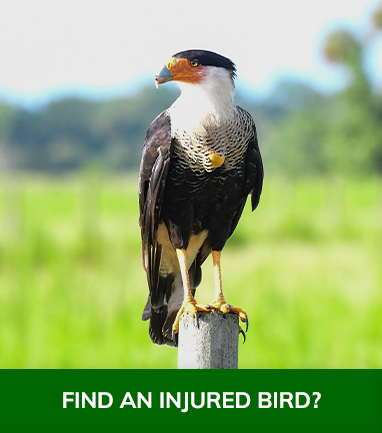
Orphaned or
       Injured Wildlife?

Audubon Center for Birds of Prey (Raptors Only)
407-644-0190

Back to Nature Wildlife Refuge
407-568-5138

Fly By Night (Bats Only)
407-414-2142

The Avian Reconditioning Center (Birds of Prey)
407-461-1056

Tom's Wildlife Rehabilitation Center (small wildlife)
407-737-0015

Haven for Injured and Orphaned Wildlife
407-260-6137

Earth Angels's Wildlife (squirrels, raccoons)
407-292-5232 (Nancy)
407-570-7153 (Laurie)
407-349-2889 (Diane)

Before you rescue a baby bird, please read the info at the following links:

"Orphaned" Baby Birds

What to Do if You Find a Baby Bird

All wildlife rehabilitators are supported primarily through donations. Please help support their "labor of love".


22nd Annual Chertok Photo Contest            Winners Announced!

Orange Audubon Society's 2010 (22nd Annual) contest featured two separate categories:

(click on the titles below to view images in a seperate window)

Actions and Interactions

1st Place - Kathy Urbach "Osprey with Youngster on Nest"

2nd Place - Jim Urbach "Red-shouldered Hawk and Juveniles"

3rd Place - Jim Urbach "Least Terns Mating"

Honorable Mention
Jack Rogers "Flippin' Crab"
Jeffri Moore "Great Egret Parent and Chick"
Vince Lamb "Limpkin Feeding Chick"
Myrna Erler-Bradshaw "Sandhill Cranes-Checking on the Babies"
John Wise "Cattle Egret with Hungry Family"

Youth Category

1st Place - Megan Authement "Florida Scrub Jay"

Honorable Mention
Alessa Craner "In the Moment"
Shaw Frederick "Limpkin Chicks


Close Encounters

1st Place - Ruth Pannunzio "Gnatcatcher and Insect"

2nd Place - Paul Hennessy "Outside the Shell"

3rd Place - Michael Libbe "Ruby-throated Hummingbird"

Honorable Mention
Alan Dart "Bug Eyed Dragon"
Jim Urbach "Osprey Feeding Week Old Chick"
Mary Atwood "Curls"
Ruth Pannunzio "Osprey and Two Fish"
Kathy Urbach "Grasshopper on Flower"

Youth Category

1st Place - Shaw Frederick "Limpkin Chick"

Honorable Mention
Chelsea Kasper "Bird's Eye View"
Alessa Craner "I See You"
Ian Gregorchik "Purple Gallinule"


OIL DRILLING DISASTER IN THE GULF: YOUR HELP NEEDED!

Dear Audubon Advocate,

The tragic oil platform explosion off Louisiana's Gulf Coast is rapidly becoming an environmental disaster. The loss of 11 oil workers may be just the beginning of this tragedy as millions of gallons of oil head for land, putting birds, wildlife and the coastal environment in grave danger.

Audubon Mobilizing to Help
Audubon staff across the country are marshalling resources and personnel to respond to the looming disaster. Audubon Florida, Louisiana and Mississippi staff and chapters are working to prepare for impacts to birds, wildlife and important habitat as the spill makes its way toward land.

Audubon is coordinating volunteer efforts and you can help! From cleaning oiled birds to counting birds to picking up trash on beaches before the oil hits - there are many things that you can do to help. If you are interested in volunteering, please sign up here . We will be back in touch soon with more details.

While every hand is needed and welcome, it's vital that volunteers offer their help through coordinated efforts like this so that the greatest good can be focused where it is needed the most. Please avoid going to affected areas or handling wildlife until you are part of coordinated responses. Even well-intentioned people can inadvertently interfere with important recovery efforts. Other sensitive areas with nesting birds that may not be impacted by the spill will not welcome random volunteers, however good the intention.

Audubon has our people on the ground and is working with state and federal agencies leading the response - we can help find the best volunteer job for you.

Let's Stop Further Spills
Take Action If you have not already submitted comments on the Interior Department plan to expand offshore oil and gas drilling, now is the time. A long-term energy strategy should focus on clean, job-producing, renewable technologies, not expanded drilling off our sensitive coasts.

1 " Size of Spill in Gulf of Mexico Larger than Thought ," New York Times, 4/29/10

Do you know someone else who cares about protecting America's beaches, birds and wildlife? Help us to spread the word:
Tell-a-Friend icon Tell-a-friend!

Trouble with the "Take Action" link in the message? Try cutting-and-pasting this link into your web browser: www.audubonaction.org/site/Advocacy?id=823. To get to the volunteer page, use this link: www.audubonaction.org/SpillResponse.


Annual Election Results

At the April 15th annual meeting of Orange Audubon Society OAS members approved the slate of Officers and Directors offered by the nomination committee. Your elected representatives will serve on the Board of Directors — as officers for a two-year term and as directors for a three-year term — starting after the June 2010 Chertok Photography Contest awards, silent auction and potluck dinner meeting.

The approved slate of Officers and Directors are:

President–Mike Godwin
1st Vice President–to be determined
2nd VP/Programs Chair–Deborah Green
Secretary–Mary Keim,
Treasurer–Teresa Williams
Board Members–Cynthia Gosiewski, Milton Heiberg, Loretta Lynn Leda, Dominique Shimizu and Leann Streeper.

We are continuing to look for other nominees for ʻvacatedʼ seats, if you are a member and are interested in serving OAS in this capacity, please contact Steve Graves at ssgesq@aol.com.


April Field Trip Report

Wekiwa Springs State Park

Fourteen birders attended the Orange Audubon Society field trip to Wekiwa Springs State Park on April 17th. The group observed at least 29 bird species including Wild Turkey, Great Crested Flycatcher, White-eyed Vireo, Red-eyed Vireo, Carolina Chickadee, Brownheaded Nuthatch, Carolina Wren, Gray Catbird,
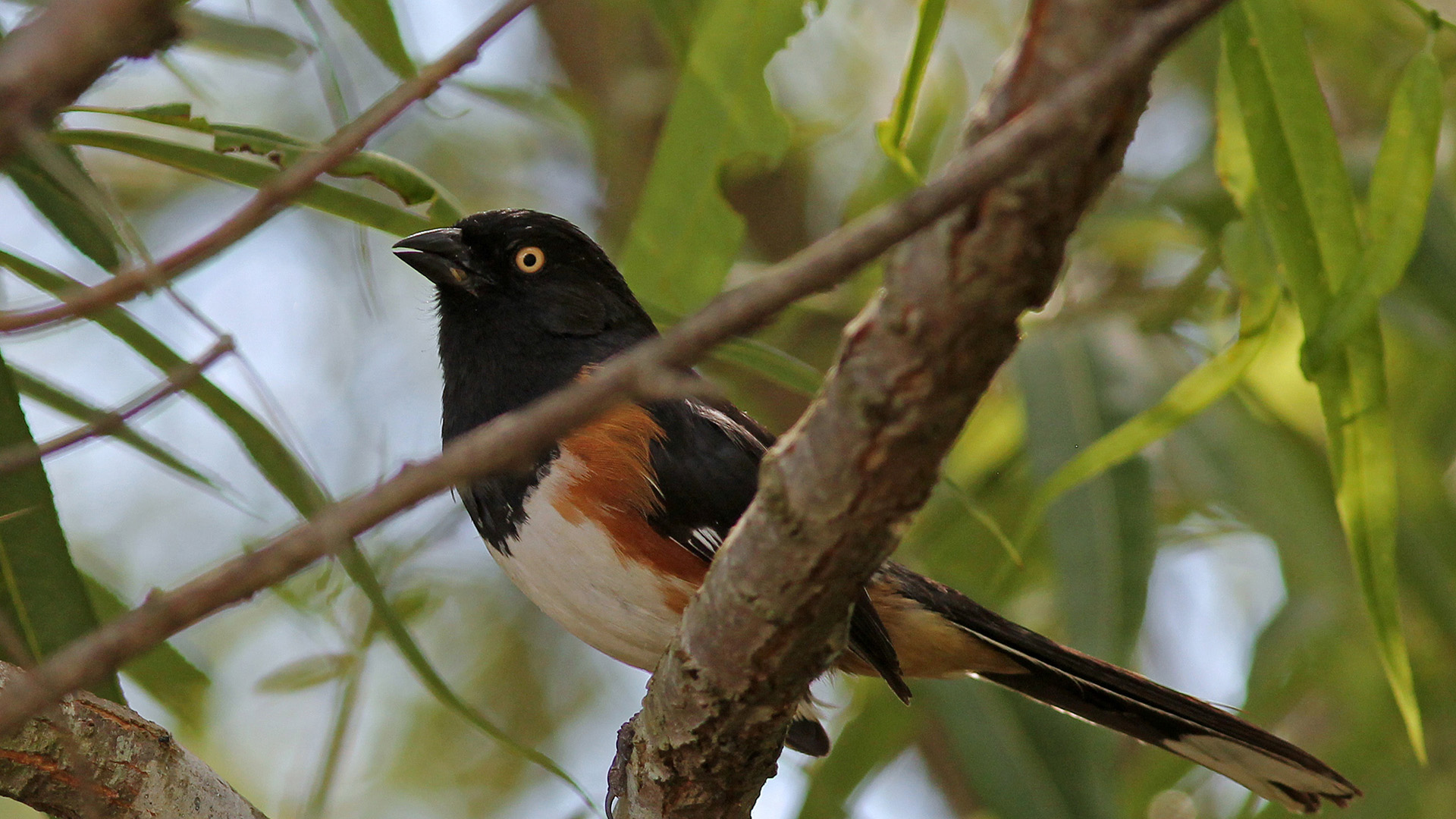
Northern Parula, Pine Warbler, Eastern Towhee, and Bachmanʼs Sparrow. Other vertebrates included White-tailed Deer, Southern Fence Lizard, Six-lined Racerunner and Southern Black Racer. Southeastern Pocket Gopher mounds dotted the Sandhill.

At least ten butterfly species were observed including Zebra Swallowtail, Palamedes Swallowtail, Little Wood-Satyr, and Northern Cloudywing. Flowers in bloom included Blueeyed
Grass, St. Peterʼs Wort, Rusty Lyonia, Fetterbush (Shiny Lyonia), Shiny Blueberry, Mock Bishops Weed, Wild Pennyroyal, Lyreleaved Sage, and Queens Delight. Some of the blueberry bushes had spongy-looking galls. The leaves had grown into 2-inch cubes. For those of you who wonʼt be able to rest until you know what causes the galls, it is a fungus, Exobasidium vaccinii.

Our trail took us through varied habitats from Sandhill to Oak Hammock to Sand Pine Scrub to Loblolly Bayhead to Swamp. One comment was “I feel like Iʼm going from one room into another.”

Mary Keim, Field Trip Committee


March Field Trip Report

Ferndale Preserve

On March 20th approximately 16 birders joined me to hike at Ferndale Preserve. The infamous Wes Biggs with a birder from Alaska were there when I arrived before 7:30 AM and had heard the pair of Great Horned Owls calling in the pre-dawn hours; by 8:00 AM the group set off to hike the 3.0 mile trail. We identified 50 species including stellar looks at the local pair of Pileated Woodpeckers from the parking lot; highlights were many singing Northern Parula, several Prairie Warblers, Brown Thrasher, courting Common Ground-Doves and the local melanistic Red-Tailed Hawk, which Wes and I believed to be a likely Dark Phase Short-Tailed Hawk before it flew. Shows we all get fooled sometimes!

Gallus Quigley, Jr., Field Trip Chair


Field Trip Report

St. Marks National Wildlife Refuge

Fifteen Audubon members [including one from Apalachee chapter and one with memberships in both Manatee and Sarasota chapters] met our three guides (from VT and AR) at the St. Marks National Wildlife Refuge (SMNWR) Visitorsʼ Center to begin a beautiful day of ʻfield trippingʼ. Though we knew it would
be colder than we are used to because of this past cold front, it really was pleasant and we eventually had to peel off layers, only to put some of them back on as we ate lunch in a shaded area where there was a cool breeze blowing across the water. Luckily, rain gear remained stowed for the entire trip.

Fifty-seven species were seen, including Carolina Chickadee, Carolina Wren and Rubycrowned Kinglet at the Wakulla State Park (WSP) Lodge before we left for St. Marks. Birds seen at the Visitorsʼ Center parking lot included Yellow-bellied Sapsucker and Hermit Thrush. Other highlights included Common Loon and Red-breasted Merganser, as well as Ruddy Duck, Redhead, Canvasback Duck, Ring-necked Duck, Bufflehead, Northern
Harrier, Lesser Yellowlegs, Willet, and Ruddy Turnstone. A frequent inhabitant near the lighthouse parking area, American Bittern, eluded us as did the Sora that is usually seen from a small tower close to the rest area by our lunch site. We ʻsettledʼ for the Peregrine Falcon there instead.

It may have been a long drive to see some birds that can be seen closer to home but the WSP Lodge is a wonderfully quaint part of old Florida and everyone seemed to like the accommodations. Thanks to Loretta Leda for arranging the guided trip at SMNWR and the stay at the Lodge; weʼre sorry she was unable to make the trip and enjoy the fruits of her labor. I hope this is a trip that will be repeated.

Loretta Satterthwaite


Audubon of Florida and Orange Audubon Score Success Against Sprawl Developments

Orange County Mayor Richard Crotty and three other county commissioners, Mildred Fernández, Bill Segal and Linda Stewart have signaled agreement with advocacy by Audubon of Florida and the Orange Audubon Society that three massive development projects in eastern Orange County should be rejected. The three commissioners are all candidates for Crotty’s position as Mayor. Crotty will leave office next year due to term limits. The political line-up largely assures that developers of these large projects will have a tough time in the future, regardless of which candidate gets elected.

Over the last 1.5 years, Charles Lee, Audubon of Florida’s Director of Advocacy and Sharon Robbins, Conservation Chair for Orange Audubon Society, have appeared at numerous meetings held by Orange County and the East Central Florida Regional Planning Council to raise substantive concerns about each of the projects. The projects are:

  • Innovation Way East, a mixed-use development that includes about 8,000 proposed homes and condominiums and 1.2 million square feet of office, commercial and industrial space.
  • Camino Reale, including 4,000 proposed homes and 1.6 million square feet of office, commercial and industrial space.
  • Rybolt Park, which plans for 5,000 new residences, as well as a 1.1 million-square-foot research park, and more than 1 million square feet of office and retail.

Charles Lee, Audubon of Florida’s Director of Advocacy noted that each of these projects has in common the fact that the Econlockhatchee River Ecosystem would be at risk of serious impacts. Further, he points out, none of these developments is designed in such a way as to have “redeeming qualities”, such as major set asides of conservation land to be protected in perpetuity in conservation easements.   While the Rybolt project did cede about 700 acres to conservation in a sale to the St. Johns River Water Management District last year, it also proposed a controversial bridge over the Econlockhatchee.  “Generally”, Lee stated, “we are advocating that at least 70% of important wildlife habitats such as those in the Econlockhatchee River ecosystem be set aside under permanent easements by developers. These three projects fall far short of that.”

Commitments by the Orange County Mayor and all of the Commissioners currently seeking the Mayor’s office to oppose these projects also suggest that recent legislative decisions concerning urban transit and the “Sunrail” project in Central Florida will begin to impact development decisions.

In order for commuter rail to work properly, Orange County development patterns will need to be re-oriented. “A dense concentration of residential and commercial development will need to be encouraged along the commuter rail line”, Lee indicated.

In the long term, Audubon hopes that the official opposition to sprawl developments in the eastern part of the county begins a trend toward concentrating growth along the rail line in previously developed portions of Orange County.


Welcome to our NEW Website!

It's a new year and a new look to the Orange Audubon Society's website. We hope you all enjoy the new design, and will visit the site often as we continue to add new features. Be sure to bookmark our Calendar of Events for a complete listing of upcoming programs, activities, and events. For website questions please contact our webmaster Mike Godwin.
Web site hosting graciously provided by Virtua Gallery

Birds in Trouble
A number of species are prompting special concern, including the Brown Pelican - just removed from the Endangered Species List, and beach-nesting terns and gulls (Caspian Tern, Royal Tern, Sandwich Tern, Least Tern, Laughing Gull, Black Skimmer) and shorebirds (American Oystercatcher, Wilson's Plover, Snowy Plover).

The coastal Reddish Egret, large wading birds (Roseate Spoonbill, Ibises, Herons, Egrets), and marsh birds (Mottled Duck, Clapper Rail, Black Rail, Seaside Sparrow, Marsh-Dwelling Songbirds) are all threatened as well.

Already, ocean-dwelling birds may be affected, like the Magnificent Frigatebird, should they come in contact with the oil.

Migratory shorebirds (plovers, sandpipers and relatives) and migratory songbirds (warblers, orioles, buntings, flycatchers, swallows, and others) may find their landing places despoiled by oil.

See Oil Spill: Wildlife at Risk , New York Times.

Butterfly Identification Class

Orange Audubon Society is offering a Butterfly ID Class.  The 7.5 hour class (3 sessions of 2 ½ hours each) is on Saturdays, May 1, 8, 15 from 2:30 p.m. to 5:00 p.m.  The class involves lectures, field observation and identification of butterflies at Orlando Wetlands Park (OWP) and Seminole Ranch Conservation Area in east Orange County. Lectures will be held in the OWP Nature Center on Wheeler Road in Christmas, FL.

Recommended field guide is Butterflies through Binoculars: Florida by Glassberg, Minno, and Calhoun, 2000, Oxford. Binoculars are helpful, especially those that are close-focusing (6 ft. or less). Instructors are Orange Audubon members Randy Snyder and Mary Keim. If you have questions about class content, call or e-mail Randy or Mary 407-851-5416, rsnyder11@cfl.rr.com).

Registration is required. Cost is $25 for Audubon members and $40 for non-members, payable by check or money order to Orange Audubon Society.  Non-members can join when registering and pay $45 (seniors 62+ and full-time students pay $40), which includes butterfly class  registration (member price $25) plus introductory 3-way annual membership in Orange Audubon and National Audubon Societies and Audubon of Florida [$20 promotional rate ($15 for seniors/students)]. The class is limited to 15 students. To reserve a space, contact Teresa mwilliams@cfl.rr.com  or 407-644-0796.


Speakers Bureau

Orange Audubon Society has a list of speakers who are willing to address schools and organizations on subjects such as birds, plants, the environment, and Florida outdoors. Call or email Deborah Green, 407-553-0028.